Values
of an Authentic Leader
Authentic Relationships
An authentic leader should have a strong focus on
authentic relationships. According to Goleman et al. (2002) "relationship
skills account for nearly three times as much impact on organizational performance as analytical skills do” (as cited in Reeves, 2006, p. 39). Authentic relationships can
best be exercised within educational settings between staff, with students, and
with parents and guardians of students (Starratt, 2004, pp. 76-80).

According
to Starratt (2008), one of the best areas for a leader to practice authentic
relationships is in their daily interactions with students. Knowing a student’s
name and hobbies or where that student lives allows the student to feel a sense
of belonging and caring within the school. This encourages students to buy into
any initiatives and goals that the school leader is trying to implement.
Starratt (2008) also highlights the importance of teachers in cultivating
authentic relationships with students. By being real with each child, the
teacher invites the student into a relationship that helps to promote the
dignity and worth of each individual student. According to Fullan (2003),
school leaders are the key people responsible for “developing relational trust,
both in demonstrating it herself or himself and in fostering a culture of
trusted relationships” (p. 43). There
are three primary areas for authentic relationships (Click on the title):
Transparency, respect, and focus on follower development, direct school leaders towards what Duignan calls “dynamic
influence fields” (Duignan, 2014, p. 164). The school leader should focus on the connections between relationships and
amplify those actions or influences that promote the growth and positive actions within the school environment, while
conversely restrain those actions orinfluences that hinder the school environment.
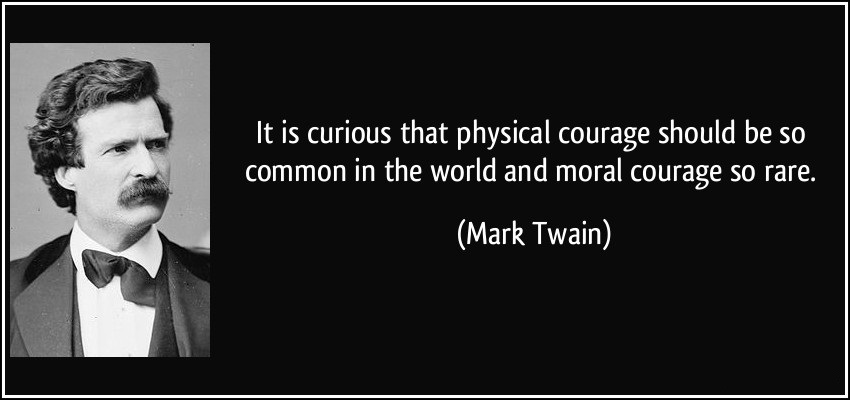
Moral Courage
According to Sekerka & Bagozzi (2007), moral
courage is “the ability to use principles to do what is good for others,
regardless of threat to self, as a matter of practice” (as cited by Hannah et
al., 2011, p. 577). Moral courage for a school leader is a critical factor in
determining the actions and directions that will be taken within the school. A leader
with moral courage will be willing to take the risks that are needed to improve
the school. According to Freeman & Stewart (2006), “it is not about the
leader as an individual, it is about something bigger – the goals and dreams of
the organization” (p. 4). This implies that the leader is able to recognize the
value of the success of the organization over his or her personal ego. Fullan
(2008) provides an example of how moral courage can be applied in the real
world of educational thought and discipline. Fullan (2008) encourages school
leaders to become system leaders, people who work to improve the overall progress
of a school district or regional area of schools. At first it would appear that
this is a self-serving, self-promotional motivation; however, it falls under
the example of moral courage because it allows a leader to make decisions and
provide direction that in the end can “help improve other schools” as a
collective effort (Fullan, 2008, p. 56).