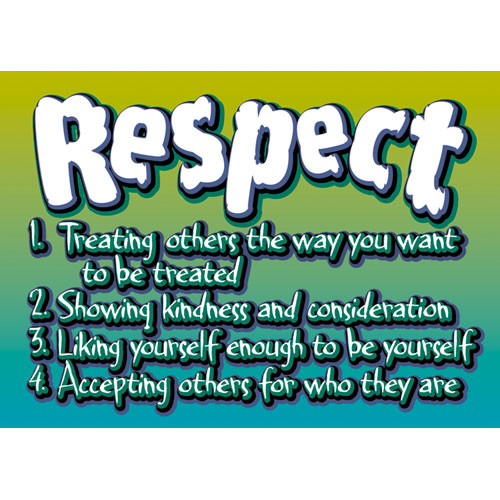
Respect
Respect. A school leader should develop the respect of those around him or her and should also respect those with whom he or she works. Leaders who are able to follow this approach conduct themselves with “honesty, trustworthiness, fairness, and care” (Brown et al., 2005, p. 120). This type of school leader is able to assume leadership as a legitimate and credible role model that encourages the ensuing point of follower development (p. 120). These school leaders are able to listen carefully to others while encouraging the school mission and goals in a mutually transactional approach (Starratt, 2004). The steady work of taking the time to focus on individuals helps authentic leaders to communicate their commitment to those around them (Loader, 1997, as cited by Starratt, 2003, p. 79).Within the context of respect, it is also important for school leaders to show humility in what they do. A school leader should keep his or herself grounded with their fellow colleagues, and not make their position of authority a major dividing point (Kramer, 2011, p. 60). This humility also ties back to a leader’s self-awareness, and should be included in practices of reflection. Starratt (2004) insists that a school leader gives “both the human respect and the civil respect that are the due of his or her colleagues" (p. 79).